
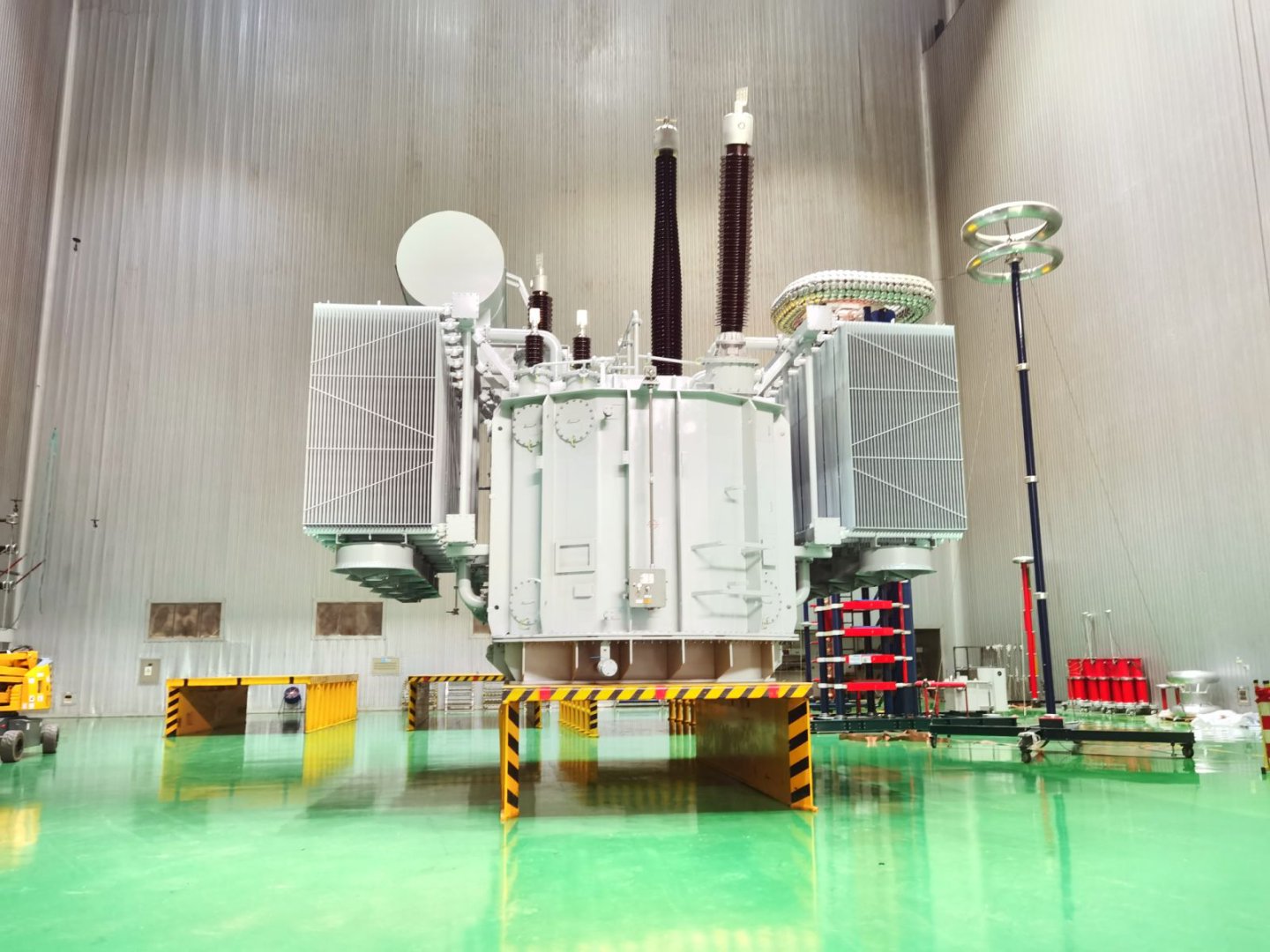
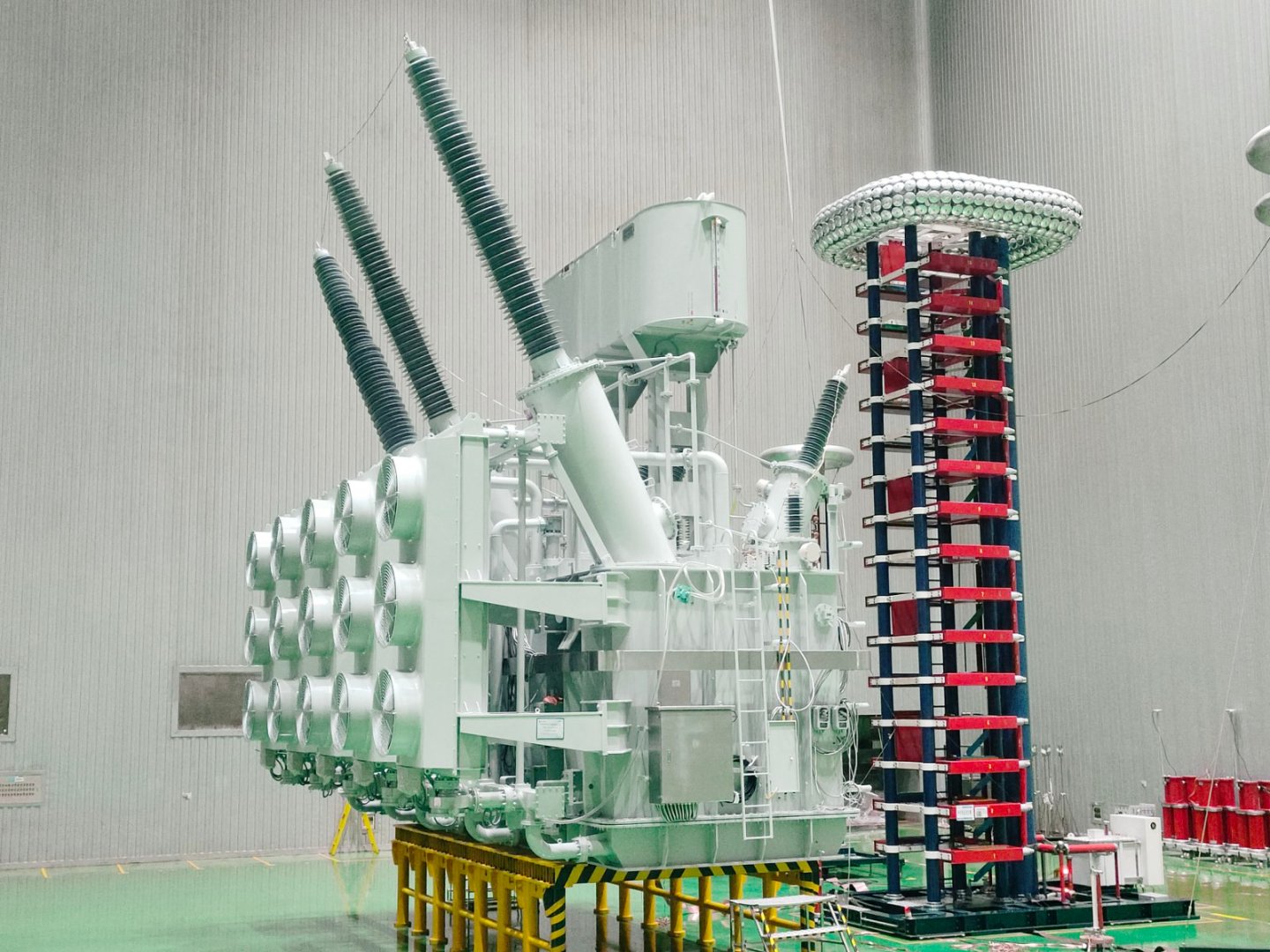
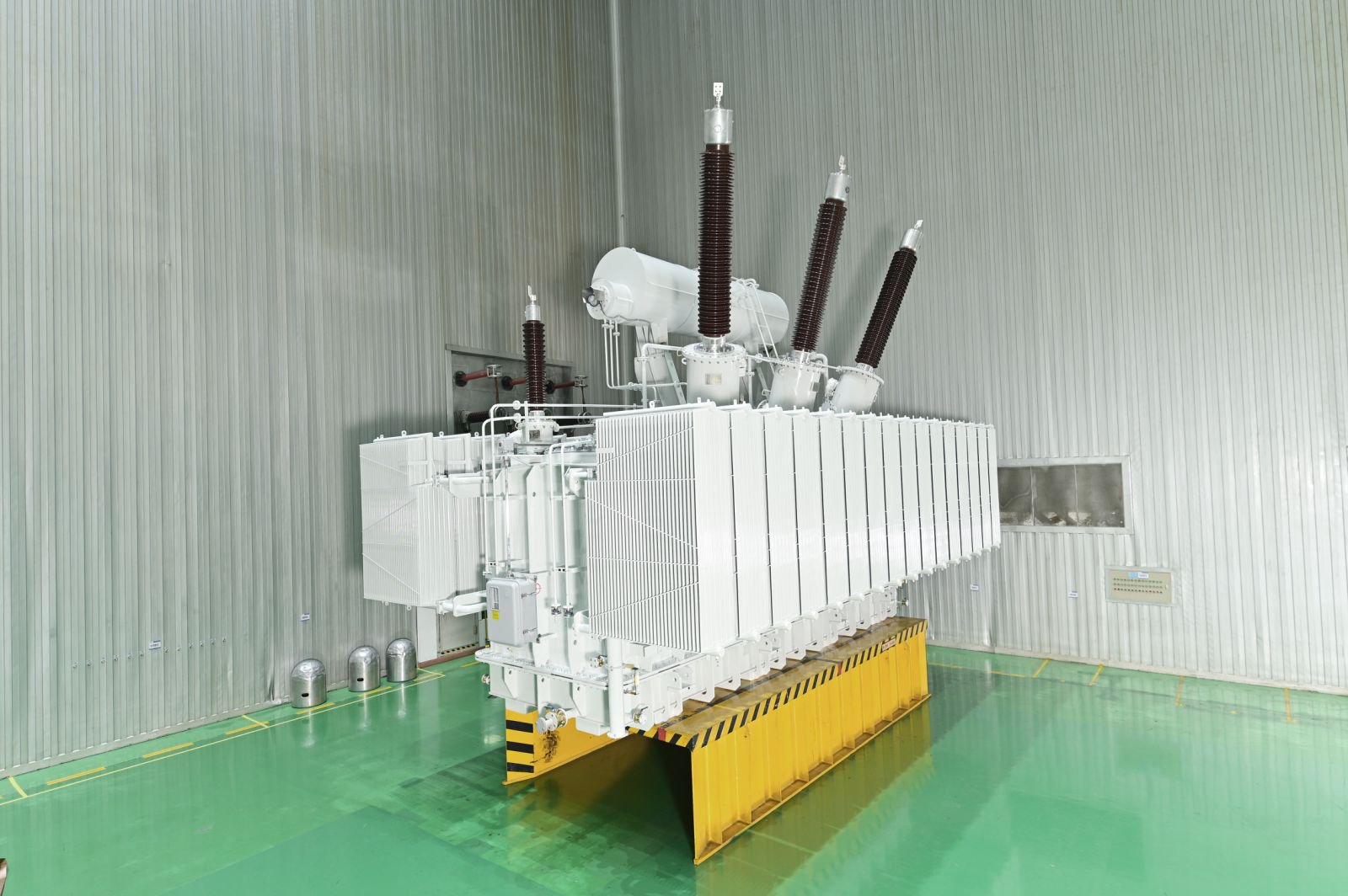
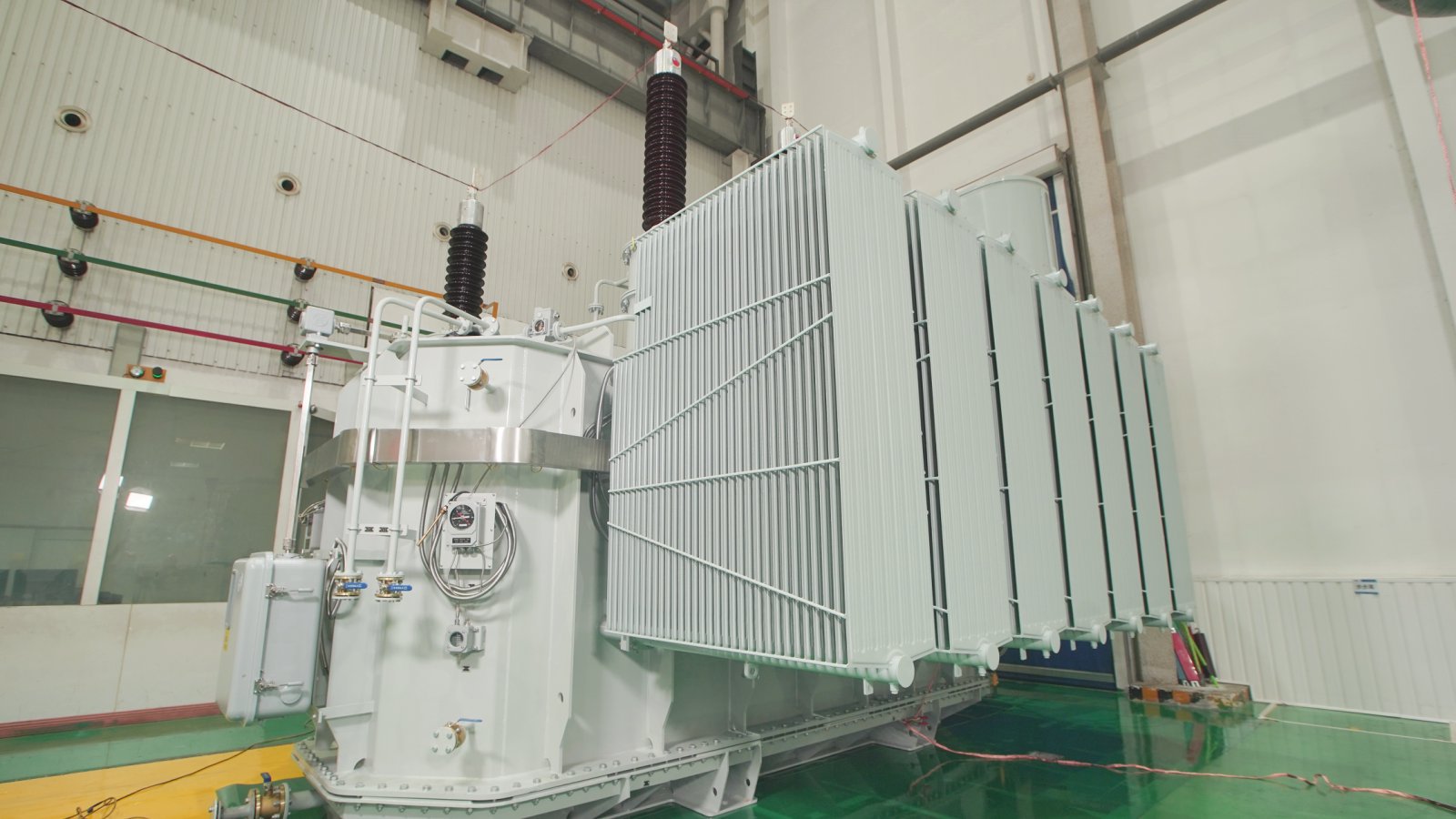
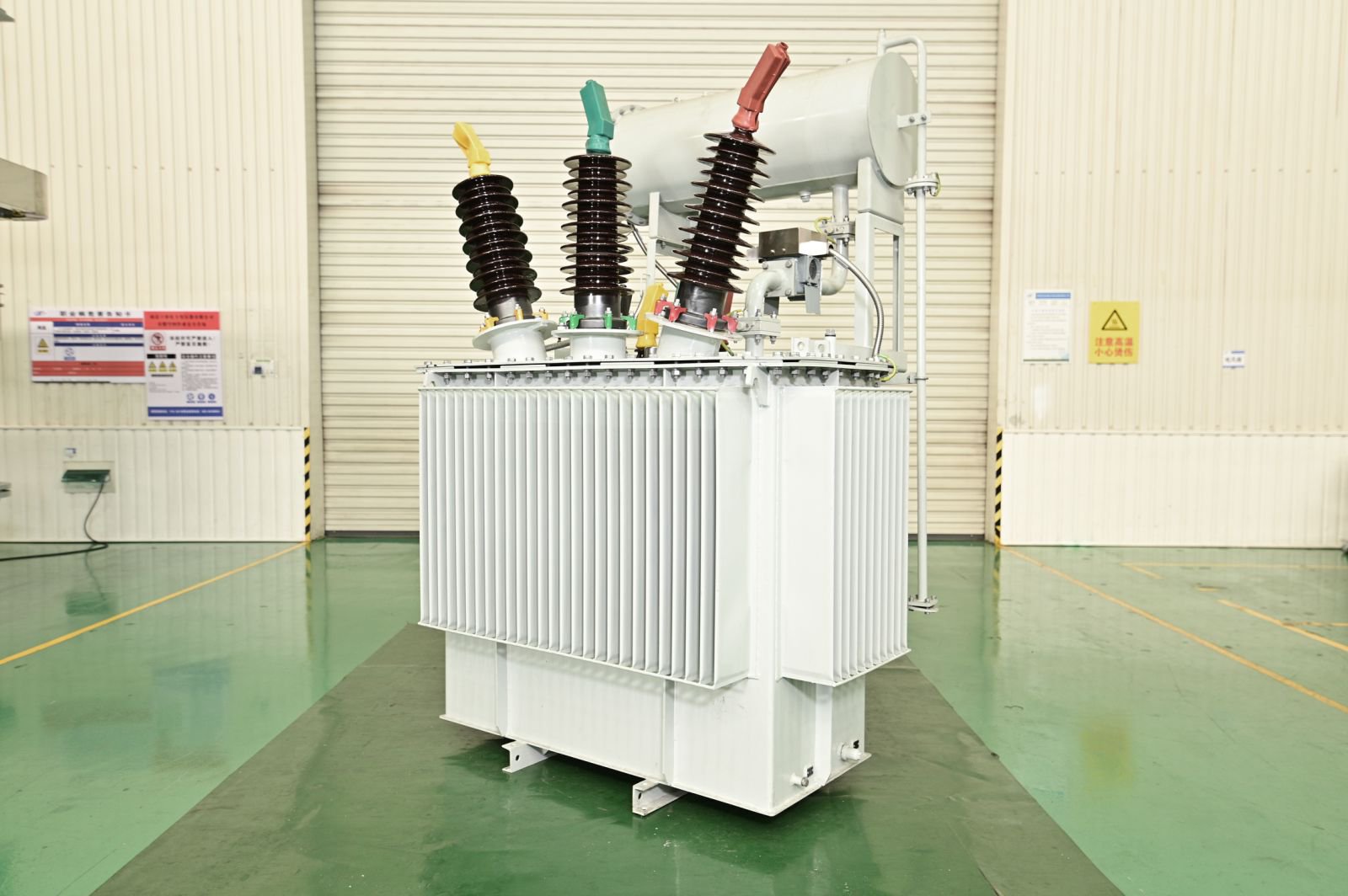

A high voltage electrical transformer connects different voltage levels within a power transmission and distribution network. In a utility substation, it may reduce transmission voltage to a regional distribution level. At a power generation facility, a generator step-up transformer increases voltage to support efficient transmission over long distances.
Selecting the correct transformer requires more than specifying its rated voltage and capacity. Short-circuit impedance, insulation coordination, load losses, cooling performance, and voltage regulation must all match the electrical system. This guide explains the technical requirements that utilities, EPC contractors, and project engineers should evaluate before ordering a high voltage power transformer.
How High Voltage Electrical Transformers Work in Power Networks
A high voltage transformer transfers electrical energy between circuits through electromagnetic induction. The voltage transformation ratio is determined primarily by the ratio of primary to secondary winding turns.
For an ideal transformer:
V₁ / V₂ = N₁ / N₂
Where:
- V₁ and V₂ represent the primary and secondary voltages.
- N₁ and N₂ represent the corresponding winding turns.
In practical power systems, transformer performance is also affected by winding resistance, leakage reactance, core losses, and operating temperature.
High voltage power transformers are used in three major applications:
- Transmission substations: Connect different transmission voltage levels, such as 500/220kV or 220/110kV.
- Regional distribution substations: Step down transmission voltage for industrial and distribution networks, such as 110/35kV.
- Power generation facilities: Step up generator output voltage for transmission and grid interconnection.
The actual voltage configuration depends on the regional grid architecture and project specifications.
High Voltage Transformer Voltage Classes and Applications
Voltage classifications vary among countries, utilities, and technical standards. The following examples illustrate commonly encountered transmission and distribution applications rather than universal definitions of voltage classes.
| Voltage Level | Typical Application | Main Engineering Consideration |
|---|---|---|
| 35kV | Industrial and regional distribution | Load requirements and voltage regulation |
| 66–110kV | Regional substations and distribution networks | Insulation coordination and network reliability |
| 132–220kV | Transmission and major substations | Short-circuit impedance and thermal performance |
| 330–500kV | Bulk power transmission | Dielectric strength and large-capacity cooling |
| 750kV | Extra-high-voltage transmission | Insulation coordination and transportation constraints |
Higher operating voltage does not automatically indicate a better transformer. Each voltage level must correspond to the electrical network, insulation requirements, and intended power transfer.
Liye Electric manufactures power transformers for different voltage classes, including 110kV power transformers and 220kV power transformers used in utility and industrial power systems.
Key Specifications for High Voltage Transformer Selection
1. Rated Capacity and Load Requirements
Transformer capacity is expressed in kilovolt-amperes (kVA) or megavolt-amperes (MVA).
For a balanced three-phase system, apparent power is calculated as:
S = √3 × V × I
Where S is apparent power, V is line-to-line voltage, and I is line current, using consistent units.
For example, a 100MVA transformer with a 110kV three-phase winding carries approximately 525A at rated apparent power on that winding.
Capacity selection must account for maximum demand, continuous loading, future expansion, ambient temperature, and cooling conditions.
An oversized transformer may increase capital expenditure and no-load energy losses. An undersized unit may experience excessive temperatures or require load restrictions.
2. Short-Circuit Impedance
Short-circuit impedance influences fault current magnitude, voltage regulation, and load sharing when transformers operate in parallel.
A lower impedance generally permits higher fault currents, while excessive impedance can increase voltage drop under load.
The correct impedance therefore depends on network short-circuit levels, protection coordination, and operating requirements.
When replacing an existing transformer, engineers should confirm impedance compatibility rather than selecting a replacement solely by voltage and MVA rating.
3. Insulation Coordination
High voltage transformer insulation must withstand normal operating voltage as well as specified temporary and transient overvoltages.
Important parameters include:
- Highest voltage for equipment (Um).
- Lightning impulse withstand voltage.
- Switching impulse withstand requirements where applicable.
- Power-frequency withstand voltage.
- External electrical clearances.
- Insulation system configuration.
Insulation requirements should be coordinated with surge arresters, substation equipment, and the applicable electrical standard.
4. Transformer Cooling Systems
High voltage oil-immersed transformers commonly use the following cooling arrangements:
| Cooling Method | Description | Application Consideration |
|---|---|---|
| ONAN | Oil Natural Air Natural | Natural circulation without forced cooling |
| ONAF | Oil Natural Air Forced | Fans increase heat dissipation |
| OFAF | Oil Forced Air Forced | Pumps and fans provide forced cooling |
| ODAF | Oil Directed Air Forced | Directed oil circulation improves winding cooling |
The cooling system must be selected according to rated capacity, loading requirements, allowable temperature rise, ambient conditions, and redundancy requirements.
For transformers with multiple cooling stages, the rated capacity associated with each stage should be specified.
5. No-Load and Load Losses
Transformer energy losses consist primarily of no-load losses and load losses.
No-load losses occur whenever the transformer is energized, while load losses increase approximately with the square of load current at a given reference temperature.
For a transformer operating at a load factor of x, a simplified loss estimate is:
Ptotal ≈ P₀ + x² × Pk
Where P₀ represents no-load losses and Pk represents rated-load losses at the specified reference temperature.
For example, consider a transformer with 50kW no-load losses and 300kW rated-load losses. At 50% loading:
Ptotal ≈ 50 + 0.5² × 300 = 125kW
This illustrative calculation excludes auxiliary consumption and certain operating effects.
For procurement, both guaranteed loss values and the anticipated load profile should be evaluated to estimate the transformer’s lifetime operating cost.
High Voltage Transformer Standards and Factory Testing
High voltage transformers should be designed and tested according to the standards specified in the purchase contract.
Common international references include:
| Standard | Technical Scope |
|---|---|
| IEC 60076-1 | General transformer requirements and ratings |
| IEC 60076-2 | Temperature rise for liquid-immersed transformers |
| IEC 60076-3 | Insulation levels and dielectric tests |
| IEC 60076-5 | Short-circuit withstand capability |
| IEC 60076-7 | Loading guidance for mineral-oil-immersed transformers |
| IEEE C57.12.90 | Test methods for liquid-immersed transformers |
These standards address different aspects of transformer performance and should not be treated as interchangeable.
What Should Be Checked During Factory Acceptance Testing?
A factory acceptance test (FAT) program may include:
- Winding resistance measurement.
- Voltage ratio and phase displacement verification.
- Short-circuit impedance and load-loss measurement.
- No-load loss and excitation current measurement.
- Applied and induced voltage tests.
- Partial discharge measurement where required.
- Tap-changer operational testing.
- Temperature-rise and impulse tests when specified.
Not every test is required on every transformer as a routine test. The applicable routine, type, and special tests must be confirmed against the selected standard and procurement agreement.
Before shipment, the manufacturer and purchaser should agree on the test scope, acceptance limits, documentation, and witness inspection requirements.
Common Mistakes When Specifying a High Voltage Power Transformer
Several specification errors can lead to equipment incompatibility, additional engineering work, or commissioning delays.
Selecting capacity without evaluating the load profile: Peak loading, continuous operating requirements, and future expansion should be considered together.
Omitting network short-circuit requirements: Transformer impedance must be coordinated with fault levels and protection equipment.
Specifying voltage without insulation levels: Nominal voltage alone is insufficient to define dielectric withstand requirements.
Ignoring installation and transportation constraints: Large transformers may require transportation studies, lifting plans, and on-site assembly arrangements.
Comparing purchase prices without evaluating losses: Two transformers with identical MVA ratings may have different lifetime energy costs.
Leaving testing requirements undefined: Test procedures, witness arrangements, and required documentation should be clarified before manufacturing begins.
Resolving these issues during technical evaluation reduces the likelihood of design revisions after an order is placed.
High Voltage Transformer Manufacturing at Liye Electric
As a China transformer manufacturer, Liye Electric provides engineering and manufacturing support for high voltage power transformers used in utility substations, power transmission networks, and industrial infrastructure.
Our manufacturing facilities cover core production, winding fabrication, insulation processing, oil tank manufacturing, transformer assembly, and high-voltage electrical testing.
Our technical team reviews project requirements involving:
- Rated voltage and transformer capacity.
- Winding configuration and vector group.
- Short-circuit impedance and loss limits.
- Insulation coordination and cooling systems.
- Tap-changing and voltage regulation requirements.
- Installation conditions and applicable standards.
Liye Electric also manufactures 330kV power transformers and 500kV power transformers for large-scale power transmission applications.
Frequently Asked Questions
What is the difference between a high voltage transformer and a distribution transformer?
A high voltage transformer is identified by its voltage characteristics, while a distribution transformer is identified by its function within the electrical network. The categories can overlap. High voltage power transformers generally handle voltage transformation at transmission and substation levels, while distribution transformers commonly supply downstream distribution networks.
How is the capacity of a high voltage transformer determined?
Capacity is determined by the required apparent power, load profile, operating conditions, future demand, and cooling capability. Engineers must also evaluate permissible loading, temperature rise, and applicable standards.
Why is transformer impedance important?
Impedance affects fault current, voltage regulation, and parallel operation. An unsuitable impedance value may create protection coordination problems or excessive voltage variation under load.
How do IEC and IEEE transformer standards differ?
IEC and IEEE standards provide technical requirements and test methods under different standardization systems. Differences may occur in ratings, temperature-rise criteria, dielectric requirements, tolerances, and testing procedures. The appropriate standard should be identified in the procurement specification.
Can high voltage transformers be customized for specific substations?
Yes. Transformer configurations can be developed according to project requirements, including rated capacity, voltage ratio, vector group, tapping range, impedance, insulation levels, cooling arrangements, and installation conditions.
Conclusion
Selecting a high voltage electrical transformer requires coordinated evaluation of electrical performance, insulation design, thermal capability, short-circuit strength, and factory acceptance requirements.
For transmission and distribution projects, the most reliable procurement approach is to establish complete technical specifications before comparing transformer designs and quotations.
Liye Electric provides customized high voltage power transformer solutions for utility substations, renewable energy facilities, and industrial power infrastructure.
For technical consultation or a quotation, send your rated capacity, voltage ratio, impedance requirements, cooling specifications, applicable standards, and project location to sales@liyeelectric.com.