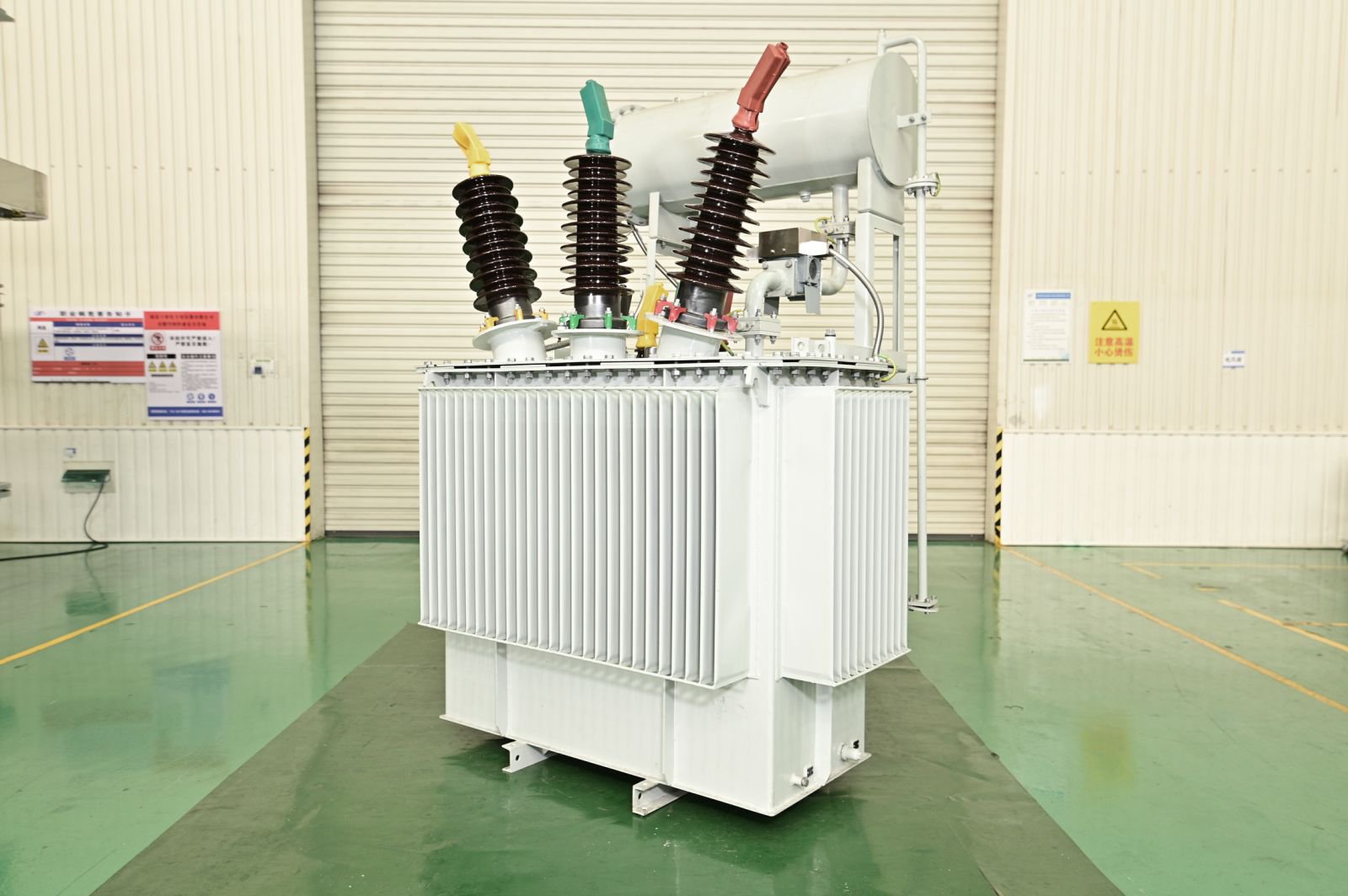
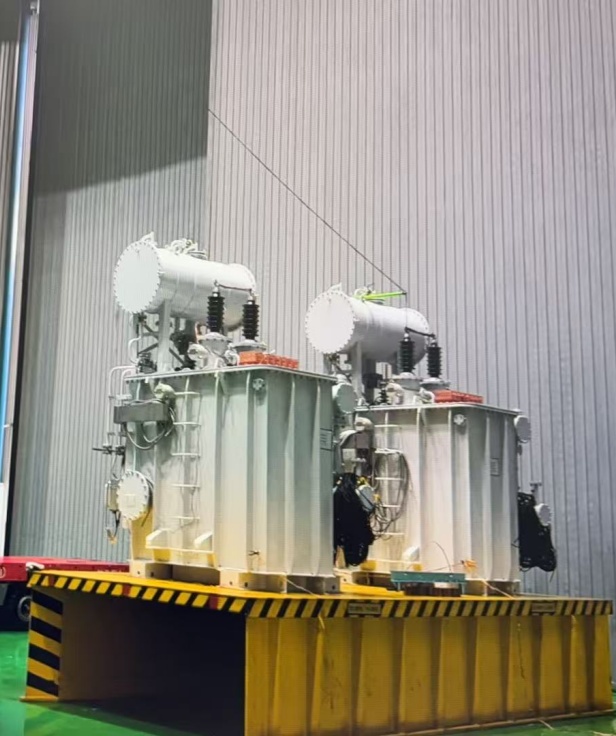
| Parameter |
Unit |
Value |
| Product Model |
– |
HDSPZ-1500/25 |
| Rated Capacity |
MVA |
1.5 |
| Rated Voltage Ratio |
kV |
25/0.04-0.09 (40-90V) |
| Short-Circuit Impedance |
% |
5.9~19.1 (tap position dependent) |
| Rated Frequency |
Hz |
50 |
| Insulation Level (Primary) |
kV |
LI170 AC70 |
| Insulation Level (Secondary) |
kV |
LI10 AC3 |
| Cooling Method |
– |
OFWF (Forced Oil Forced Water) |
| No-Load Loss |
kW |
2.4~3.6 (tap position dependent) |
| Load Loss |
kW |
23~36 (at 75℃, tap dependent) |
| Temperature Rise Limit |
K |
Top oil: 60
Winding average: 65 |
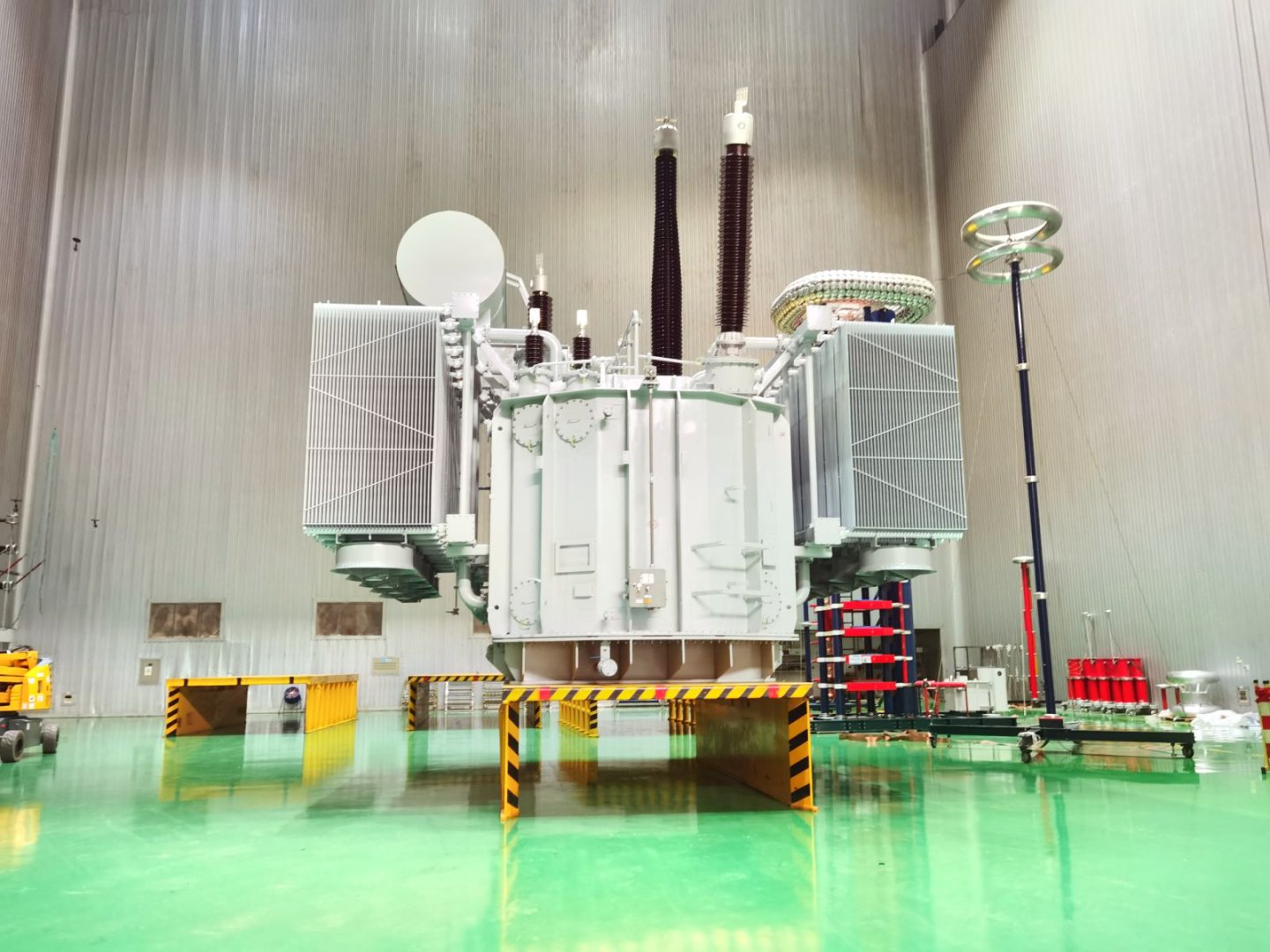
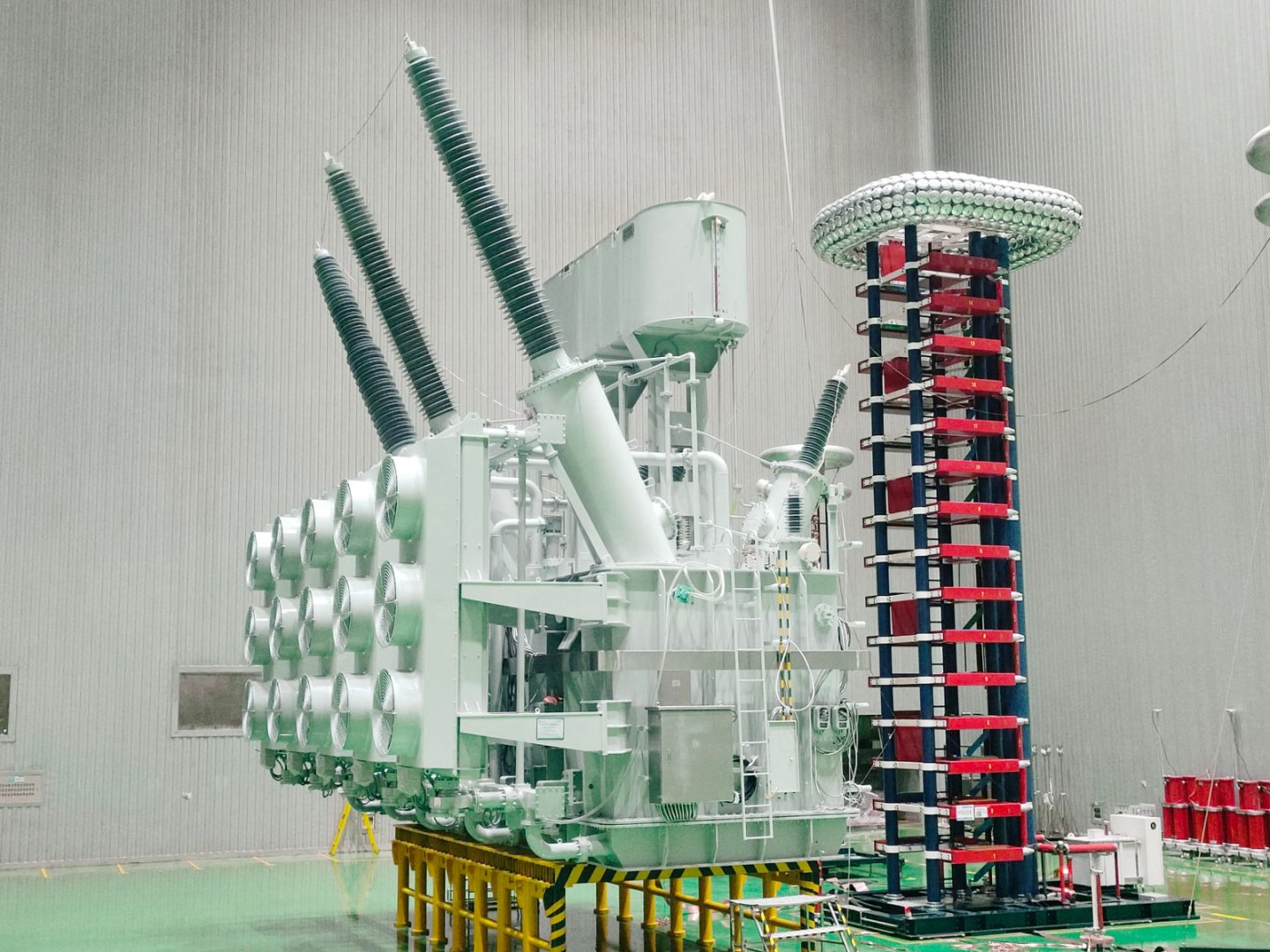
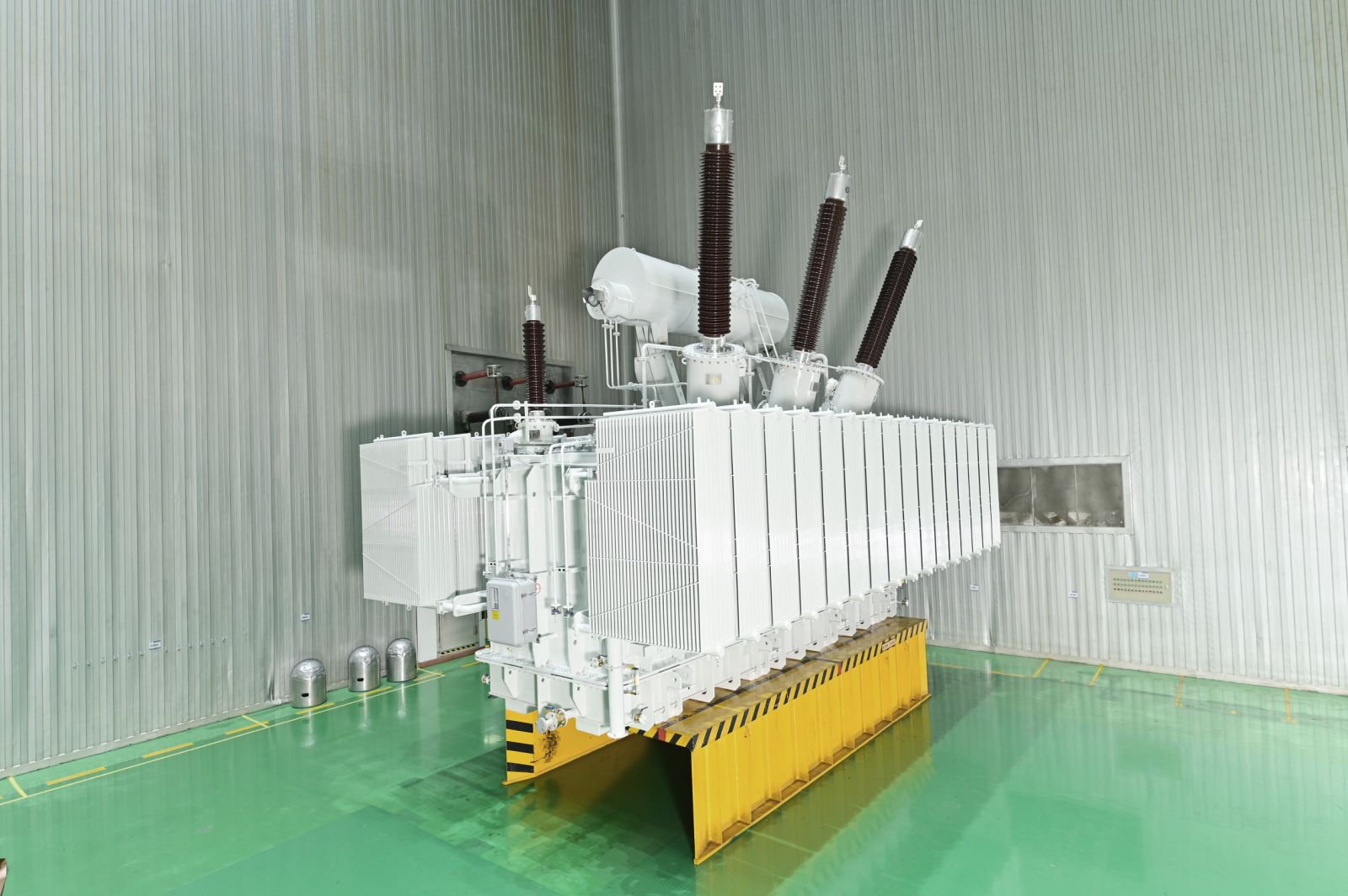
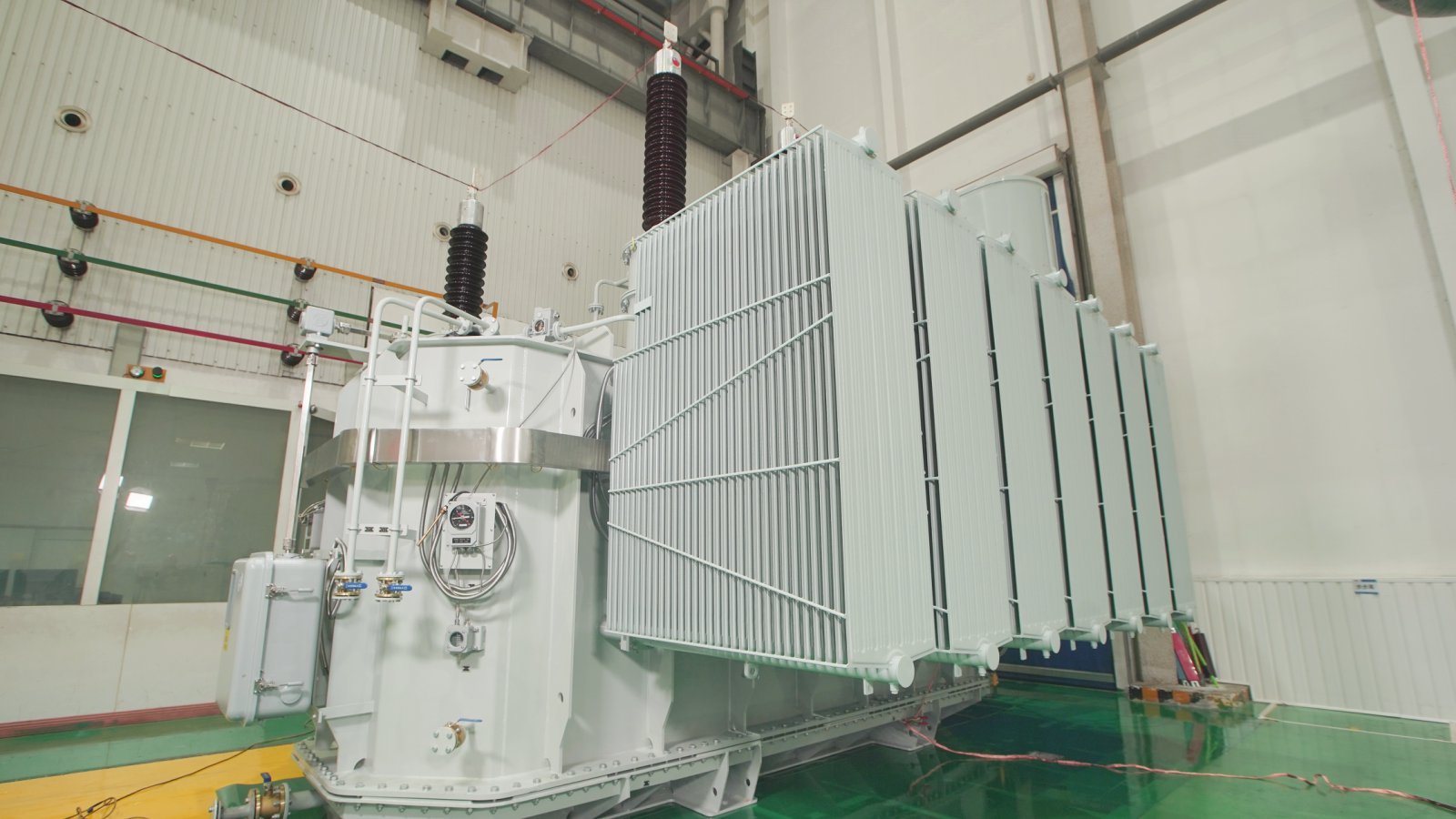
Low-Voltage High-Current Transformer for Furnace Operation
One of the main characteristics of an electric furnace transformer is the large difference between its input and output electrical conditions.
The transformer receives medium- or high-voltage AC power and steps it down to a very low secondary voltage while supplying the high current required by the furnace.
For the HDSPZ-1500/25 model, the transformer converts a 25 kV input into an adjustable 40–90 V secondary output.
This makes it a typical low voltage high current transformer for heavy industrial furnace applications.
Key operating requirements include:
● High secondary current capability
● Adjustable furnace-side voltage
● Stable operation under load fluctuations
● Strong short-circuit withstand capability
● Reliable insulation under repeated electrical stress
● Effective heat dissipation
● High mechanical strength of transformer windings
● Continuous operation under industrial conditions
Why Is an Electric Furnace Transformer Different from a Standard Power Transformer?
A standard power transformer is generally designed to transfer electrical power between relatively stable AC systems.
An electric furnace transformer supplies a furnace load that can change significantly during different stages of the heating or smelting process.
This creates several special transformer design requirements.
High Current Output
Electric furnaces generally require comparatively low secondary voltage combined with very high operating current.
The winding and connection structure of the furnace transformer therefore needs to be designed to handle substantial current while controlling losses and temperature rise.
Frequent Load Changes
Furnace operating conditions can change rapidly during heating, melting and refining.
An industrial furnace transformer needs sufficient electrical and mechanical strength to withstand these repeated changes in load.
Adjustable Secondary Voltage
Different stages of a furnace process may require different electrical power levels.
Adjusting the transformer secondary voltage allows operators to match furnace power to different operating stages.
The HDSPZ-1500/25 provides a secondary voltage range of 40–90 V.
Short-Circuit Withstand Capability
Certain electric furnace processes can produce severe current fluctuations or temporary short-circuit conditions.
For this reason, winding mechanical strength and transformer impedance are important considerations when designing a furnace duty transformer.
Electric Furnace Transformer Cooling
Thermal management is especially important in furnace transformer applications because high current operation can create significant winding and structural losses.
The HDSPZ-1500/25 uses OFWF — Oil Forced, Water Forced cooling.
In an OFWF system, transformer oil is circulated through the transformer and heat exchanger, while water is used to remove heat from the oil circuit.
This cooling arrangement is suitable for applications requiring effective heat removal under demanding operating conditions.
Liye can evaluate the appropriate cooling configuration according to:
● Transformer capacity
● Furnace duty cycle
● Load characteristics
● Installation environment
● Ambient temperature
● Cooling water availability
● Temperature-rise requirements
Applications of Electric Furnace Transformers
Liye electric furnace transformers are designed for industrial systems where large amounts of electrical energy must be supplied to furnace equipment at low voltage and high current.
Typical applications can include:
Metallurgical Furnaces
The electric furnace transformer can be used as part of furnace power systems for metal melting, refining and other metallurgical processes.
Potential applications include:
● Steel processing
● Ferrous metal processing
● Non-ferrous metal processing
● Alloy production
● Metal melting and refining
Electric Arc Furnace Systems
An electric arc furnace transformer supplies the high-current electrical power required to create and maintain an electric arc for metal melting.
Compared with a conventional distribution transformer, an EAF transformer must be designed for severe electrical loading and rapidly changing furnace conditions.
Where an electric arc furnace is involved, Liye can evaluate transformer capacity, voltage regulation, impedance and cooling according to the furnace electrical specifications.
Industrial Heating and Furnace Systems
An industrial furnace transformer may also be used for specialized electric heating processes where a low-voltage, high-current supply is required.
The final transformer design depends on furnace type, heating principle and electrical load characteristics.
Adjustable Voltage for Different Furnace Operating Stages
Furnace electrical demand is not necessarily constant throughout the entire operating cycle.
During different process stages, operators may need to increase or decrease the electrical power supplied to the furnace.
An electric furnace transformer can therefore use multiple secondary voltage steps to match the required operating conditions.
When specifying a transformer, important voltage-regulation parameters include:
● Maximum secondary voltage
● Minimum secondary voltage
● Number of voltage steps
● Voltage difference between steps
● Required operating current
● Constant-current or constant-power operating requirements
● Tap-changing method
These parameters should be determined according to the furnace manufacturer’s electrical design.
Custom Electric Furnace Transformer Design
Liye can engineer a furnace transformer according to specific furnace and electrical system requirements.
Available customization can include:
● Rated capacity
● Primary voltage
● Secondary voltage
● Secondary voltage adjustment range
● Number of voltage taps
● Winding connection
● Short-circuit impedance
● Insulation level
● Cooling method
● Temperature-rise requirements
● Load cycle
● Overload requirements
● Transformer accessories
● Indoor or outdoor installation
● Ambient temperature and altitude
Because furnace transformer operating conditions vary significantly between different processes, we recommend providing the complete furnace electrical specification during the inquiry stage.
Information Required for Furnace Transformer Selection
To select the correct electric furnace transformer, please provide the following information where available:
● Furnace type
● Furnace rated power
● Required transformer capacity
● Primary supply voltage
● Required secondary voltage range
● Maximum secondary current
● Number of voltage regulation steps
● Required short-circuit impedance
● Furnace operating cycle
● Cooling requirements
● Applicable transformer standard
● Ambient temperature
● Installation altitude
● Electrical single-line diagram
● Furnace manufacturer’s transformer specification
Providing detailed furnace operating data allows the transformer to be designed around the actual duty rather than simply selecting a transformer according to MVA rating.
Why Choose Liye as Your Electric Furnace Transformer Manufacturer?
Liye Electric provides in-house transformer R&D, component manufacturing, assembly and testing capabilities.
Our manufacturing system includes dedicated centers for transformer windings, insulation components, cores, tanks, assembly and electrical testing.
Key capabilities include:
● In-house transformer winding manufacturing
● Precision core cutting and stacking
● Transformer insulation component processing
● Oil tank fabrication
● Vapor phase drying
● Transformer assembly
● High-voltage electrical testing
● Customized special transformer engineering
Liye’s manufacturing and R&D capabilities cover transformer voltage classes up to 750 kV, supported by more than 700 employees, including over 200 technical personnel.
For metallurgical companies, furnace manufacturers, EPC contractors and industrial users looking for an electric furnace transformer manufacturer, Liye can develop the transformer according to furnace electrical specifications and actual operating duty.
Electric Furnace Transformer FAQ
What is an electric furnace transformer?
An electric furnace transformer is a special-purpose transformer designed to supply electric furnaces with the low voltage and high current required for heating, melting or metallurgical processes.
Why do electric furnaces require special transformers?
Electric furnaces can impose high current, rapidly changing loads and repeated electrical stress on the transformer. A dedicated furnace duty transformer is therefore designed with suitable winding strength, impedance, cooling and voltage regulation.
What is the output voltage of an electric furnace transformer?
The required voltage depends on the furnace design. The HDSPZ-1500/25 shown on this page provides a secondary voltage range of 40–90 V.
Can the secondary voltage be adjusted?
Yes. Furnace transformers can be designed with multiple voltage steps so the furnace power can be adjusted according to different operating stages.
What cooling method does this furnace transformer use?
The HDSPZ-1500/25 uses OFWF forced-oil, forced-water cooling to remove heat generated during demanding furnace operation.
Can Liye customize an electric furnace transformer?
Yes. Liye can customize capacity, input voltage, secondary voltage range, voltage steps, impedance, winding configuration, insulation and cooling according to the furnace specification.
What information should I provide for a quotation?
Provide the furnace type, transformer capacity, primary voltage, secondary voltage range, required secondary current, voltage regulation steps, impedance, duty cycle, cooling requirements and applicable standard.
Request an Electric Furnace Transformer Quote
Looking for an electric furnace transformer supplier for a metallurgical plant or industrial furnace project?
Send Liye Electric your furnace electrical specification, required transformer capacity, input voltage, secondary voltage range and operating conditions.
Our engineering team can evaluate your furnace load and provide a customized electric furnace transformer solution.